
Plantar Fasciitis Exercises: What Helps and What to Avoid

If your first steps out of bed in the morning send a sharp pain through your heel, you are not alone. Heel pain that worsens after rest and eases as you move is a classic pattern of plantar fasciitis, and one of the most common reasons people seek foot care. For many people, a sensible exercise routine is a core part of recovery. This guide covers the stretches and strengthening exercises physiotherapists commonly use, a simple 4-week progression, what to avoid, and when it is time to get assessed.
Stop and get assessed if you have: pain at night or at rest, swelling, numbness or tingling in the foot, sudden severe pain after an injury, or a history of diabetes or circulation problems.
What is plantar fasciitis?
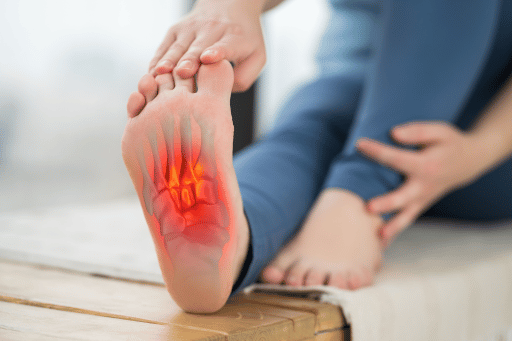
The plantar fascia is a thick band of tissue that runs along the bottom of your foot, from the heel toward the toes. Plantar fasciitis is the term commonly used for pain in the heel and arch area that is often worse with the first steps after sitting or sleeping, and again after long periods on your feet.
The exact cause varies from person to person. Factors that may contribute include a recent change in activity or running volume, tight calf muscles, unsupportive footwear, prolonged standing on hard surfaces and changes in body weight. Because other conditions can cause heel pain, an assessment is the best way to know what is going on in your foot.
Before you start: how to do these exercises safely
Go gently at first. Mild discomfort that settles soon after exercise may be acceptable for many people. Sharp, worsening or lingering pain is a signal to stop and reduce the load.
Be consistent rather than aggressive. Doing a moderate routine regularly usually matters more than pushing hard for a few days.
Build up slowly. If an exercise flares your symptoms, go back to the previous step for a few days before trying again.
Wear supportive footwear while you are building up, especially on hard floors.
If you are unsure whether these exercises suit you, a physiotherapy assessment in Brampton [add internal link to the physiotherapy page] can help tailor them to your foot, your activity level and your history.
Plantar fasciitis stretches
Stretching is usually where people begin. The goal is to ease tension in the calf and the sole of the foot so that movement feels less guarded.
1. Wall calf stretch
How to do it: Stand facing a wall with your hands on it at chest height. Step one foot back, keeping that heel on the floor and the knee straight. Lean forward until you feel a stretch in the calf. Hold for about 30 seconds, and repeat 2 to 3 times on each side.
May help with: Tight calf muscles, which often go hand in hand with heel pain.
Common mistake: Letting the back heel lift or the foot turn outward, which reduces the stretch.
2. Plantar fascia stretch
How to do it: Sit and cross the sore foot over the opposite knee. Gently pull your toes back toward your shin until you feel a stretch along the arch. You can press your thumb along the arch to check that the tissue feels tight. Hold for about 10 seconds and repeat 8 to 10 times.
Seated towel variation: If you cannot reach your toes, loop a towel around the ball of your foot while sitting with your leg straight, and gently pull the towel toward you.
Before your first steps: Many people find it useful to do this stretch while still sitting on the edge of the bed in the morning, before standing.
May help with: Morning stiffness and the sharp first-step pain that can follow rest.
Common mistake: Pulling hard into pain. The stretch should feel firm, not sharp.
Plantar fasciitis strengthening exercises
Once stretching feels comfortable, strengthening helps the foot and calf cope with the load of daily life. Many rehab programs include it because the tissue often needs to be gradually loaded to tolerate walking, standing and sport.
1. Towel curls and the short-foot exercise
Towel curls: Sit with your foot flat on a small towel on a smooth floor. Curl your toes to scrunch the towel toward you, then relax. Aim for 2 to 3 sets of 10 to 15 repetitions.
Short-foot exercise: With your foot flat on the floor, try to draw the ball of your foot toward your heel without curling your toes, so the arch gently lifts. Hold for 5 to 10 seconds and repeat about 10 times.
May help with: The small muscles in the foot that support the arch.
Common mistake: Gripping with the toes during the short-foot exercise. Keep the toes relaxed.
2. Calf raises
How to do it: Stand holding a counter for balance. Rise onto the balls of both feet, then lower slowly over about three seconds. Start with 2 to 3 sets of 10 to 15 repetitions and progress to single-leg raises only when the double-leg version feels comfortable.
May help with: Calf strength and tolerance for standing and walking.
Common mistake: Dropping down quickly. The slow lowering phase is where much of the benefit comes from.
3. Toe-extended calf raise
How to do it: Place a rolled-up towel under your toes against a step or wall so the toes stay bent upward. Rise onto the balls of your feet, pause, and lower slowly with control. Use 3 sets of 8 to 12 repetitions, a few times a week, and only if it settles well.
May help with: Loading the plantar fascia in a more targeted way once the basic calf raise feels easy.
Common mistake: Progressing too quickly. If your heel pain flares and lingers, step back to the standard calf raise.
A simple 4-week progression
This is a general example, not a prescription. Many people find it useful to move at their own pace and let their symptoms guide when to progress.
Week | Focus | Exercises | What to expect |
1 | Calm things down and start moving | Wall calf stretch, plantar fascia stretch (including before first steps) | Stiffness may ease a little. Mild, settling discomfort is common. |
2 | Add gentle strength | Week 1 plus towel curls and short-foot exercise | Foot may feel more supported. Keep volume low. |
3 | Build calf strength | Weeks 1-2 plus slow double-leg calf raises | Some muscle fatigue is normal. Sharp or lingering pain is a signal to go back a step. |
4 | Progress the load | Add toe-extended calf raises if comfortable | Morning pain may be less intense for many people, but timing varies. |
If your symptoms are not improving, or are getting worse, speak to a physiotherapist rather than pushing on.
How long does plantar fasciitis take to heal?
There is no single answer. Many people notice gradual improvement over several weeks to a few months with consistent management, but some take longer, especially if the load on the foot stays high or the problem has been present for a long time. Progress is rarely a straight line, and a flare after a long day on your feet does not necessarily mean you are back at the start.
What tends to matter most is staying consistent with your routine, managing how much you are on your feet, wearing supportive footwear and increasing activity gradually. If you have not seen meaningful change after a few weeks, an assessment can help rule out other causes and adjust your plan.
What not to do
Pushing through sharp pain. Discomfort that builds during exercise or lasts well afterward is a reason to ease back.
Long barefoot walks on hard floors. Many people find this aggravates heel pain, especially early on.
Sudden jumps in running or walking volume. Increase gradually, and give your body time to adapt.
Relying on rest alone. Short-term relief from rest is common, but pain often returns when you resume activity without building tolerance.
When to see a physiotherapist
A physiotherapist can confirm whether your pain fits plantar fasciitis and build a plan around your situation. Consider booking an assessment if:
Your symptoms have not eased after a few weeks of consistent effort.
You have pain at night or at rest.
You notice swelling, numbness or tingling in the foot.
You have diabetes or circulation problems.
You are unsure which exercises are right for you.
If any of these apply, book a physiotherapy assessment at Physio Movement in Brampton. We will take a full history, examine your foot and movement, and talk through a plan that suits you.
How physiotherapy can help
Physiotherapy for heel pain generally starts with a thorough assessment of your foot, ankle, calf and how you load your body during daily life and activity. From there, care may include a tailored exercise program, hands-on treatment, taping, guidance on footwear and advice on managing activity levels.
If you are looking for plantar fasciitis physiotherapy in Brampton, our team can help you decide what is likely to be useful for your foot and how to progress safely.
Final thoughts
Plantar fasciitis can make everyday activities such as walking, standing, and exercising uncomfortable. However, for many people, a gradual approach that includes appropriate stretching, strengthening exercises, supportive footwear, and activity management may help improve foot comfort and function.
Start with gentle plantar fasciitis stretches and gradually introduce strengthening exercises as your symptoms allow. Avoid pushing through sharp or worsening pain, and consider a physiotherapy assessment if your heel pain does not improve or begins affecting your daily activities.
If you are experiencing persistent heel pain, the team at Physio Movement in Brampton can assess your foot, understand your symptoms, and recommend a physiotherapy plan based on your individual needs.
Ready to take the next step towards better foot health? Book a physiotherapy assessment at Physio Movement and get guidance on managing plantar fasciitis and returning to your daily activities comfortably.
Frequently asked questions
How long do plantar fasciitis exercises take to work?
Many people notice gradual improvement over several weeks, but the timeline varies. Consistency, activity levels and how long the problem has been present all play a role. If you see no change after a few weeks, it is worth getting assessed.
Should I stretch or strengthen first?
Most people start with gentle stretching to ease tension in the calf and arch, then add strengthening as symptoms settle. A physiotherapist can help you decide the best order for your foot.
Is walking OK with plantar fasciitis?
For many people, some walking is fine, and staying gently active may be better than complete rest. If walking causes sharp or worsening pain, reduce the distance and build up gradually.
Can I do these exercises every day?
Stretches are often done daily, sometimes more than once. Strengthening exercises are commonly done a few times a week to allow recovery between sessions. If you are unsure, ask your physiotherapist for a schedule that fits you.
Do I need orthotics?
Not everyone does. Some people find supportive footwear or insoles helpful, while others improve with exercise and load management alone. An assessment can help you decide whether orthotics are worth considering.
Is plantar fasciitis the same as a heel spur?
No. A heel spur is a bony growth at the heel that can be seen on imaging, while plantar fasciitis refers to pain in the plantar fascia tissue. Some people with heel pain have a spur and some do not, and a spur is not always the source of pain.


Comments